I have no one to talk to about this.
So you’re stuck with me for the next 900 words while I trauma dump on you. Because tell me why one of my favourite anti-establishment creators just took THE most corporate of corporate checks?
Now, I’m not going to name names. But a certain someone who built a massive, fiercely loyal audience by exposing institutional corruption, corporate greed, and the dark underbelly of the elite, while also smacking the sh*t out of golf balls (and being very talented at such) just dropped a paid advertisement for a Meta AI.
The comments are an absolute warzone.
The words "sellout," "grifter," and "hypocrite" are being hurled around in the thousands. The audience feels deeply betrayed. We thought this creator was different. We thought she was one of us.
But as the dust settles on yet another internet scandal, we have to look past the immediate drama and ask the much more uncomfortable question: Is the creator in the wrong for taking the money? Or are we the idiots for expecting a person with a smartphone and an audience to be our moral compass?
This is my breakdown of what I’d like to call Ideological Catfishing, and why the creator economy is hitting a crisis of authenticity it might not survive.
Society has kind of moved past pretty lifestyle videos.
The modern algorithm now rewards high-stakes edge.
Rebellion sells. We know this. Anti-establishment rhetoric is one of the highest-performing niches on social media because anger, scepticism, and institutional distrust drive unparalleled engagement. I mean, why wouldn’t it? Just look at the state of the world.
But we (I) have confused a content strategy with a personal code of ethics.
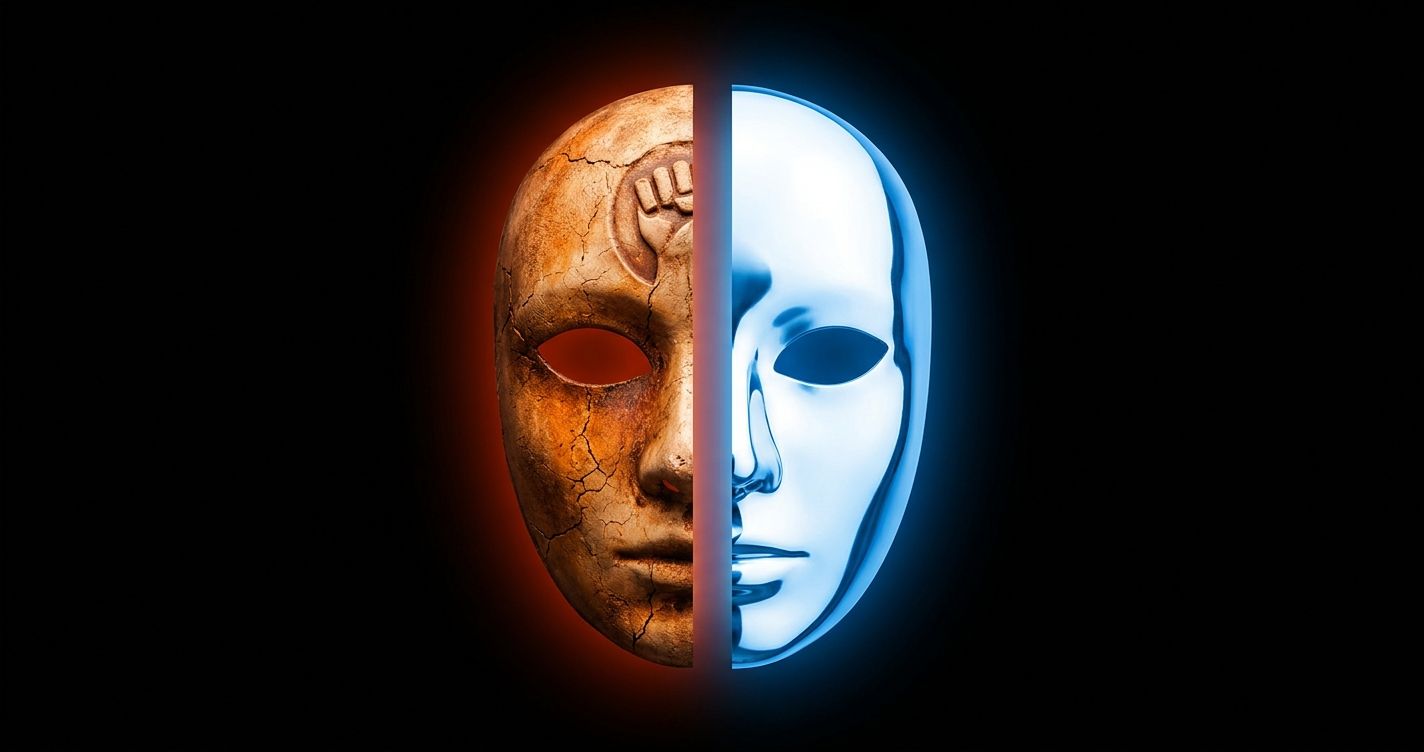
When an anti-corruption creator signs a contract with a trillion-dollar tech conglomerate like Meta, the mask gets completely obliterated. They spent years telling you how the system is designed to manipulate and survielle you, only to hand you the tool the system built to do it.
The truth is that, for a lot of creators, anti-establishment politics isn't a worldview. It is a niche. An aesthetic. It is just another way to aggregate eyeballs until the check from the highest bidder gets large enough to justify the hypocrisy.
The real reason the audience is hurting isn't because they hate AI. It's because the parasocial contract has been breached.
When you buy a product recommended by a beauty influencer, you know the vibe. They like the blush, they get paid, you buy the blush. It’s transactional. But when you follow a creator who speaks on truth, ethics, and corruption, the currency isn't product affinity… the currency is shared trauma and shared values.
When a "truth-teller" sells out to the machine they claim to fight, they are retroactively invalidating the trust that built their platform. They're telling their audience that all that passion, all those deep dives, and all that "fighting the good fight" had a literal price tag.
Unfortunately, the system works exactly as intended. Social media platforms are not grassroots activist hubs. They are commercial ad networks. Expecting a creator to turn down life-changing corporate money to preserve the integrity of your feed is like going to a casino and being shocked that the house wants your money.
So, how can brands, creators and agencies handle “sell out” allegations?
If you’re like me, a marketer, watching this disaster unfold, it’s important to see the massive strategic lessons here about influencer alignment:
- If you are a massive tech corporation, do not hire an edgy, anti-establishment creator just because they have a high engagement rate. The backlash will alienate their audience and make your brand look cluelessly desperate for cultural relevance.
- Hire creators whose existing content naturally integrates with your product. If you are selling an AI tool, sponsor the tech-optimist, the productivity hacker, or the digital designer. Do not try to colonise the audience of a creator whose entire brand is built on being sceptical of your exact industry. Go figure.
- The future of influencer marketing belongs to creators who choose fewer, deeper partnerships that actually align with their lifestyle. Audiences have developed an incredibly sharp radar for hypocrisy. A single misaligned ad can destroy three years of community building in a single tap of the "Publish" button.
When your favourite creator lets you down, it’s a painful wake-up call.
But it’s also a necessary one.
It reminds us that the people on our screens are not our leaders, our friends, or our saviours. They are small businesses operating in a hyper-extractive economy. They have bills to pay, algorithms to appease, and exit strategies to plan.
By all means, enjoy the deep dives, laugh at the commentary, and watch the golf swings. But the moment a screen-bound creator tries to pretend they are the voice of a revolution, check their bio for the disclosure tag. Because in the creator economy, the revolution will not be televised. It will be sponsored by a tech giant, and it will come with an affiliate link.
-Sophie Randell, Writer