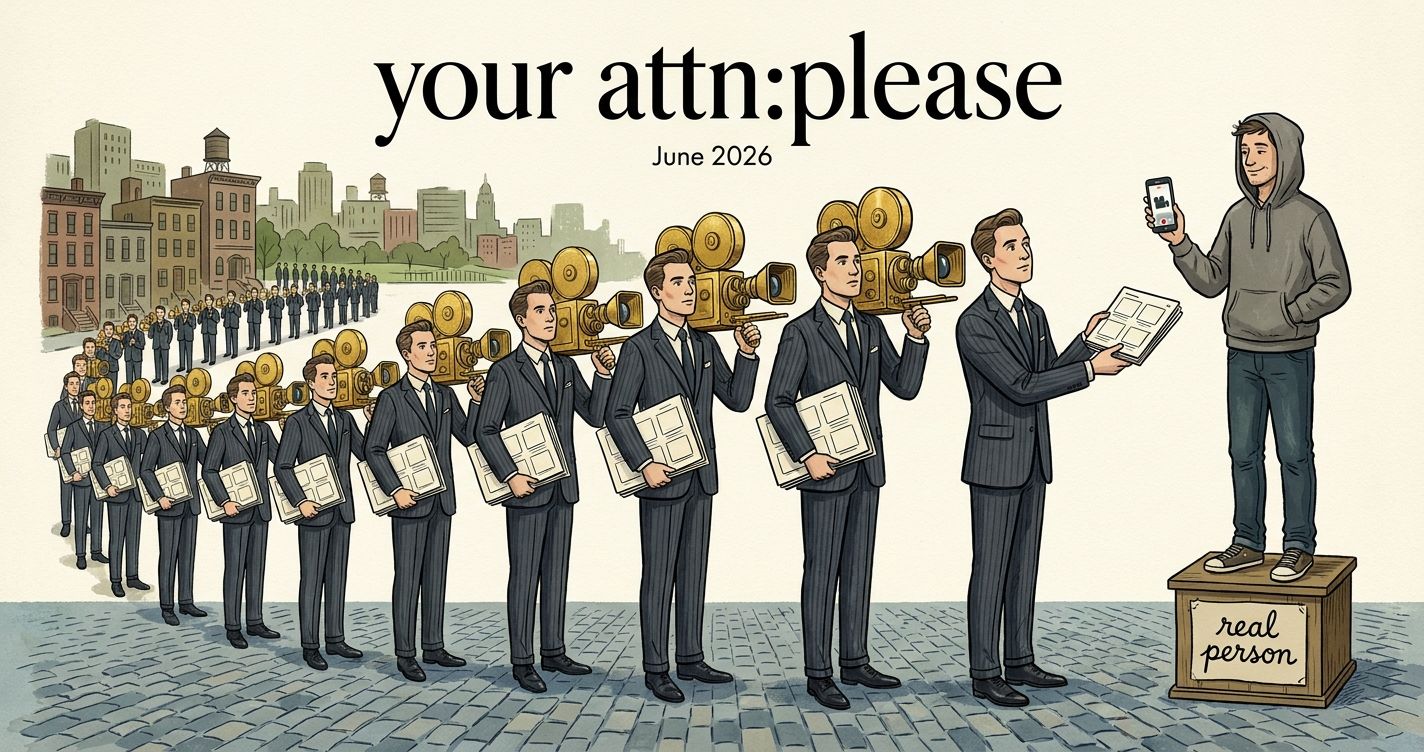
User generated content (UGC) is content made about your product by real customers and independent creators, not your marketing team. It works because people trust people: 92% of consumers trust peer recommendations over ads. And it costs a fraction of studio production, with most creators charging $500 to $1,200 per video.
A stranger holding your product will outsell your best ad. I have watched it happen for years across our client accounts. Here is the thing most brands get wrong: they treat UGC like a production job. It is not. It is a trust job. This guide covers what UGC actually is, how to find the right creators, how to brief them without killing the magic, and why the ad platforms love this stuff.
Why UGC works: the two reasons
UGC works for two reasons. First, it is affordable: a creator might charge $500 for a video that would cost $5,000 to $10,000 through a production company with talent, crew, and editing. Second, it is authentic: it is made by a real person in their real style, and audiences can feel the difference.
Think about the maths from the creator’s side. The video takes them an hour. They charge $500. That is $500 an hour, great money for them. And you just got authentic content for a tenth of the production-company price. Industry pricing guides back this up: UGC runs 3 to 10 times cheaper than traditional production. Everyone wins.
How to find the right creators
Finding UGC creators is a taste exercise, not a procurement exercise. Spend time watching creators until you find people whose natural content style you already like. If you like how they talk about anything, you will like how they talk about your product. Style fit beats follower count every time.
- Watch their last 10 posts. Would you keep watching if it was not research?
- Check the comments. Real conversations or dead air?
- Look for people already in your category, or near it.
- Reach out simply: tell them you like their style and want them to make a piece about your product.
The brief: keep it broad or kill the magic
The best UGC brief is barely a brief. Say this: “Here is my product. Make a piece of content you think your audience would genuinely enjoy, that feels organic, and that talks about what we do.” Then get out of the way. The moment you script it, you have paid a stranger to make a bad ad.
You found this creator because you trust their style. So trust it. Do not worry about CTAs. Do not hand them brand guidelines as thick as a phone book. Give them a genre guideline if you need one, and nothing more. The goal is content people actually want to watch, with your product living naturally inside it.
Why UGC makes brilliant ads
UGC gives you two things ad accounts are starving for: volume and variation. Brief five creators and you get five completely different pieces. Run them all, and Meta’s ad platform shows each one to the demographic it lands with. Different faces and styles attract different people. One production-company ad cannot do that.
This is the part most people miss. The value is not one great video. It is the diversity. 84% of people trust a brand more when it uses real customer content. Let the platform do the targeting. Your job is feeding it variety.
The ideal play: blend it with organic
The perfect strategy blends UGC with your own organic social presence: your brand builds the relationship, UGC provides the social proof and the ad fuel. If you cannot run both, a UGC-only approach still works, with one rule: keep the content organic in feel, never full-on ads.
FAQ
How much does UGC cost in 2026?
Beginner creators charge $75 to $300 per video. Most professionals sit between $500 and $1,200. Top creators with proven results charge $3,000 or more. Compare that with $5,000 to $10,000 for one production-company video and the economics speak for themselves.
What is the difference between UGC and influencer marketing?
Influencers rent you their audience. UGC creators make you content. You are not paying for reach, you are paying for authentic material you can post and run as ads on your own channels. That is also why UGC is far cheaper.
Should I give UGC creators a script?
No. Give them the product, the goal, and a genre guideline at most. Scripted UGC reads as an ad, and the entire value of UGC is that it does not.
Does UGC work for service businesses?
Yes. Swap “here is my product” for “here is the experience”. Customers filming their result, their visit, or their before-and-after does the same trust job a product unboxing does.
Keep reading: UGC strategy hub · content repurposing: post it again · how to batch create social media content