
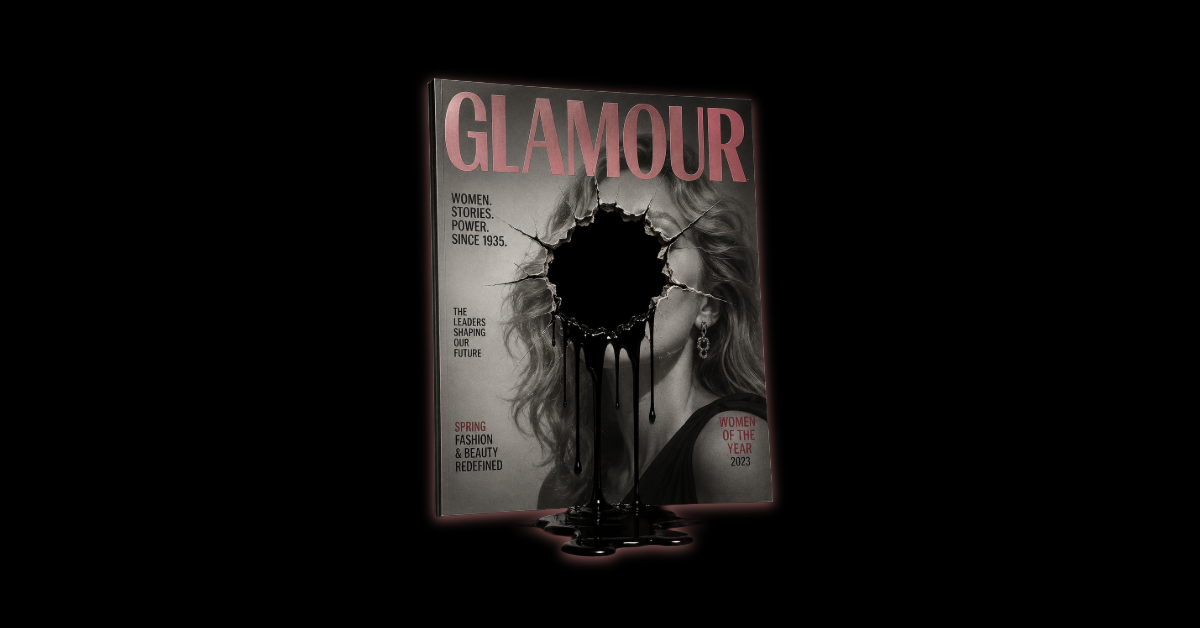
Condé Nast has gutted Glamour’s already skeletal editorial staff, parted ways with their Editor-in-Chief, and announced a new corporate focus: shopping posts.
Because we are in dire need of those, right guys???
Instead of award-winning reporting, the future of the brand is programmatic, SEO-optimised listicles like “Granny Sandals Are the Secret to a Stylish Summer Look”.
The strategy is simple: fire the expensive humans, rank for low-stakes search terms, and collect a 4% commission when a reader clicks an Amazon link to buy sunscreen.
On a spreadsheet, I’m sure this looks like a genius cost-cutting play. But in reality, it’s a stark example of a dangerous corporate trend I call Harvesting the Ghost. And if you work in marketing, branding, or content, you need to understand exactly why this strategy is kind of a slow-motion suicide pact.
You cannot monetise a shadow forever.
When a corporate parent cuts the editorial heart out of a legendary title like Glamour, they are making a cynical bet. They believe that the brand equity, ya know, things like the trust, the authority, the 90-year history built by human writers, etc, etc, can be detached from the actual writers and used to fuel an affiliate engine.
They are trying to live off the residual heat of a fire they just put out:
Phase 1: Human Magic ──> Writers build trust, voice, and a deep cultural legacy.
Phase 2: Corporate Cut──> Fire the humans. Replace voice with SEO affiliate links.
Phase 3: The Ghost Phase──> Brand bleeds authority until the logo means nothing.
As legendary magazine founder Jane Pratt noted on the shift: “By getting out of that, what they’re doing is going more into competition with the shopping portals.”
And that is the trap, baby. Glamour lost its voice. It also lost its competitive moat. The moment a legacy magazine stops offering a sharp, knowing, editorial perspective, it stops being a cultural institution. Instead, it becomes just another faceless shopping portal competing against Pinterest, TikTok Shop, and AI chatbots.
When you strip away the human friction, you aren't optimising.
You’re turning your luxury asset into a basic freaking commodity.
This is both a tragedy for journalists and a massive structural opportunity for independent creators.
Consumers haven't stopped craving a knowing, sharp editorial voice. Nor have they stopped wanting to be told what is cool, what matters, and what to think by a human being they trust. They are simply fleeing the corporate ruins to find it elsewhere.
The audience that used to buy Glamour at the newsstand is migrating to:
- Niche Substack newsletters: Where individual writers have total editorial freedom and an unfiltered, human connection with their subscribers.
- Curated social media ecosystems: Where micro-tastemakers provide genuine, un-sponsored recommendations that feel like a text from a friend.
- Community-led platforms: Where voice and perspective are valued over aggressive search engine optimisation.
Condé Nast thinks they are saving money by cutting writers. What they are actually doing is transferring their most valuable asset (hellllooo!!! audience trust!!!) directly into the hands of independent creators who still care about the craft.
How to avoid becoming a ghost brand:
If you are a marketer, a founder, or a creative director, the Glamour pivot is your warning. If you want your brand to survive the next five years, you cannot treat your brand voice like a cost centre.
Here is how you protect your equity:
1. Don't compete with the portals.
If your content strategy can be entirely replicated by a basic Google search or an AI chatbot, you are already losing. Do not try to out-optimise the algorithm. Instead, double down on the things machines and affiliate bots cannot do: original reporting, deep point-of-view essays, and high-production storytelling.
2. Protect your tastemakers.
A brand is only as good as the humans who dictate its taste. If you treat your writers, designers, and editors like replaceable cogs, your audience will notice the exact moment the soul leaves the building. Invest in personalities, not just platforms.
3. Build a moat of sentiment, not scale.
It is better to be deeply loved by 50,000 obsessed readers than passively skimmed by 5 million accidental Google searchers. Scale is fragile. Affiliates are temporary. True, unshakeable brand loyalty only happens when a human reader feels seen, challenged, and entertained by another human being.
The corporate world is obsessed with efficiency right now.
They want the traffic without the talent and the monetisation without the magic.
But Glamour’s regression proves that when you fire the poets to hire the bean-counters, you might win the next quarter's spreadsheet…but you lose the future. The internet doesn't need another generic shopping portal. It needs a voice.
Don't let your brand become a ghost.
-Sophie Randell, Writer